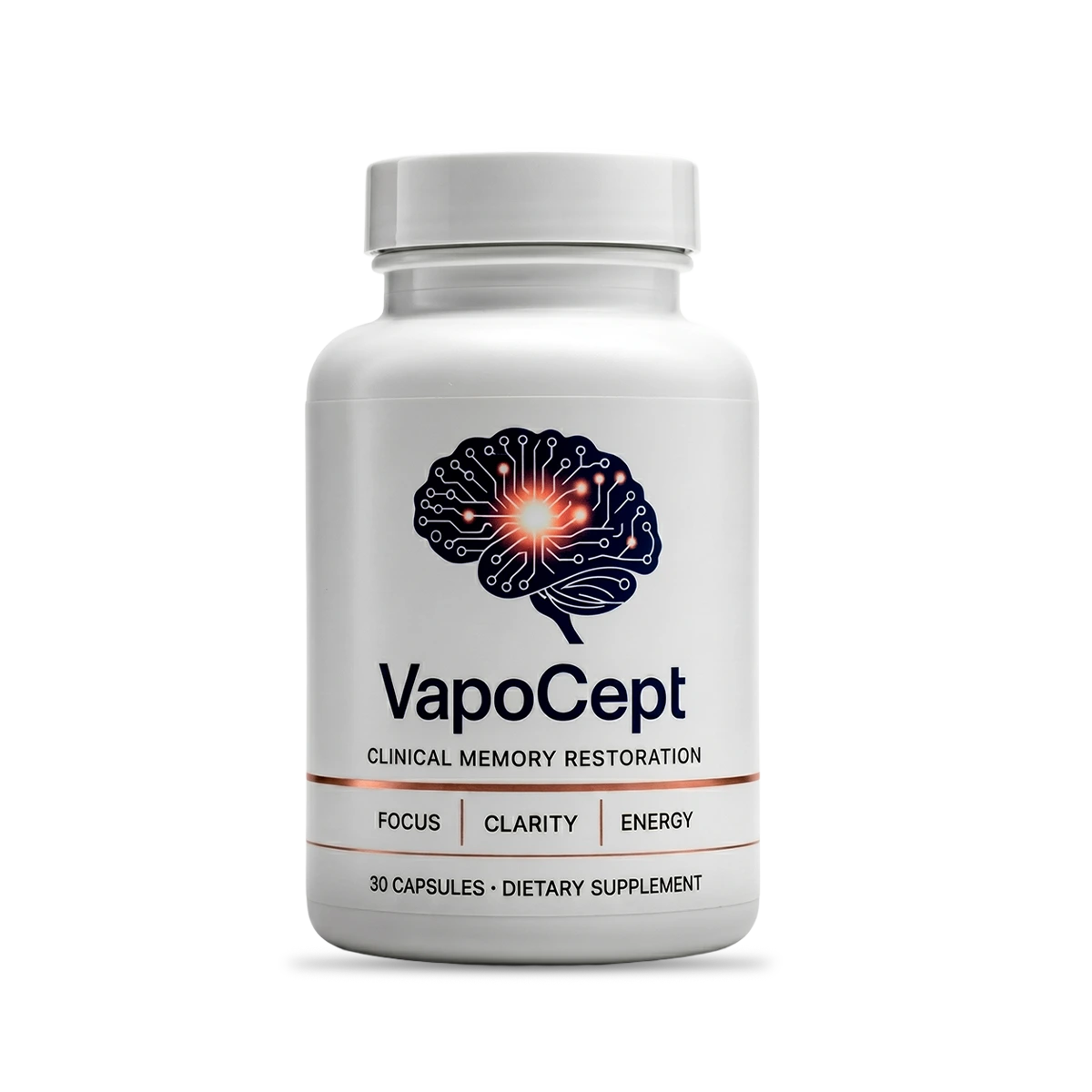
Summary: a readable six-ingredient label, an evidence base that is genuinely decent for two ingredients and genuinely thin for two others, one interaction that deserves a real conversation, and a place in the routine that is fifth rather than first.

"The question I get asked is whether it works. The question I wish I got asked is what else is going on in the week — because that is usually where the answer is."
The ranking I would give a patient
If someone in their fifties or sixties asked me to list the things that support cognitive health as we age, in order, a supplement would not be near the top. Blood pressure management would be first. Then sleep, with sleep apnoea specifically ruled out if there is snoring and daytime fatigue. Then regular aerobic exercise. Then hearing correction, which is badly underrated. Then staying socially and mentally engaged.
Every one of those has a stronger and better-replicated evidence base than any product in this category. Any honest review has to start there, because a patient who buys a capsule and changes nothing else has bought the least effective item on the list.
What I would say next is this: if those things are in reasonable order and you want to add a well-labelled nutritional product on top, that is a defensible decision. It is the sequencing that matters, not the capsule.
The four things I check on any bottle
When a patient hands me a supplement, I do the same four things in the same order, and none of them involve the front of the label.
First, named ingredients. A panel reading "Proprietary Cognitive Matrix 750 mg" tells me nothing I can use — I cannot check it against a medication list, compare it to a published trial, or tell whether an active is present at a meaningful amount or a token one. Second, the inactive ingredients, which tell you about the capsule, the allergens and whether the product suits someone's diet. Third, anything with a known interaction profile. Fourth, and only then, the claims.
VapoCept® clears the first test more cleanly than most of this category. Six actives named individually: D-Glucosamine Sulfate Potassium Chloride, Ginkgo Biloba Extract, Turmeric Extract, Marigold Extract, Green Tea Extract, Bamboo Extract. Three inactives, also named: bovine gelatin capsule, magnesium stearate, microcrystalline cellulose. Worth knowing that five of the six are plant extracts and glucosamine is an amino sugar, which matters if you are comparing formulas. That is a panel a person can take to an appointment and have a real conversation about.
The interaction I would raise first
Ginkgo Biloba can affect platelet function and bleeding time. In practice that means anyone taking warfarin, clopidogrel, apixaban, daily aspirin or a similar medication should speak with their prescribing physician before starting a ginkgo-containing product, and that ginkgo is typically stopped a couple of weeks before scheduled surgery or a dental extraction.
This is not a reason to avoid ginkgo. It is a reason to mention it. Most interactions in medicine are manageable when known and hazardous when they are a surprise.
Two smaller points belong in the same breath. Turmeric stimulates bile flow, which matters with gallstones or gallbladder disease, and it can cause mild stomach upset taken without food. And glucosamine is sometimes manufactured from shellfish — anyone with a shellfish allergy should confirm the source with the manufacturer rather than assume.
Where the evidence holds up
Two ingredients here are doing most of the scientific work.
Lutein, supplied by marigold extract, has the most coherent story. It accumulates in neural tissue rather than simply passing through, and measured lutein status in older adults tracks consistently with memory and processing-speed performance. A twelve-month trial in adults averaging seventy-four years old reported improvements in complex attention and cognitive flexibility on supplementation. The safety record over decades is excellent.
Ginkgo Biloba has the most data and the most argument. A six-week trial in 188 healthy adults aged forty-five to fifty-six found better recall of appointments on a standardised extract — and no advantage at all on recognition tasks in the same study. The large multi-year Ginkgo Evaluation of Memory trial found it did not prevent dementia. All of those findings are real, and a page quoting only the flattering one is not being straight with you.
Where it is thin, and I will say so
Bamboo extract and D-glucosamine sit in a different category. Bamboo supplies bioavailable silica and some flavonoid antioxidants; direct human research on cognition is close to nonexistent. Glucosamine's case rests on large observational datasets linking habitual use with lower inflammatory markers and better cardiovascular outcomes — an indirect argument, and observational data cannot establish cause.
Turmeric and green tea extract are in between: strong mechanistic and antioxidant data, smaller and shorter human cognitive trials. An eighteen-month study of forty non-demented adults aged fifty-one to eighty-four using a bioavailability-enhanced curcumin reported memory and attention benefits — encouraging, and forty people is forty people. Encouraging rather than settled is the right phrase for both.
How I would actually use it
One capsule with a meal containing some fat, since the lutein and the curcuminoids are both fat-soluble and absorption suffers without it. Morning, because green tea extract carries a trace of caffeine. Attached to an existing habit, because the commonest reason a supplement fails is a half-used bottle in a cupboard rather than anything about the formula.
And assessed honestly at two to three months rather than two weeks, judging the whole routine rather than the capsule alone. If you started walking daily in the same month, you will not be able to separate the two — and the walking is the part I would keep.
When to stop shopping and book an appointment
There is a category of memory change that does not belong on a supplement website. Get an appointment rather than a bottle if you notice memory getting noticeably worse month over month; difficulty with familiar tasks like paying bills or following a long-used recipe; getting lost in familiar places; word-finding problems that interrupt conversation regularly; or personality and judgement changes that family notice before you do.
Several causes of memory change are treatable — thyroid disease, B12 deficiency, sleep apnoea, depression, medication side effects. Every one of them gets missed when the first response is to buy a supplement and wait three months.
This review is educational and reflects general clinical reasoning about a product category. It is not a diagnosis, a prescription, or personal medical advice, and it does not establish a physician–patient relationship. Consult your own healthcare provider before starting any supplement.
See Pricing & Packages